What Is The Only Movable Bone In The Skull Module 1 Of Pptx
Begin Now what is the only movable bone in the skull first-class playback. Complimentary access on our video portal. Experience the magic of in a extensive selection of videos presented in crystal-clear picture, essential for passionate streaming fans. With content updated daily, you’ll always be informed. Watch what is the only movable bone in the skull specially selected streaming in retina quality for a genuinely gripping time. Register for our creator circle today to witness unique top-tier videos with totally complimentary, no need to subscribe. Look forward to constant updates and experience a plethora of uncommon filmmaker media built for high-quality media savants. Don’t miss out on uncommon recordings—swiftly save now! Experience the best of what is the only movable bone in the skull singular artist creations with flawless imaging and members-only picks.
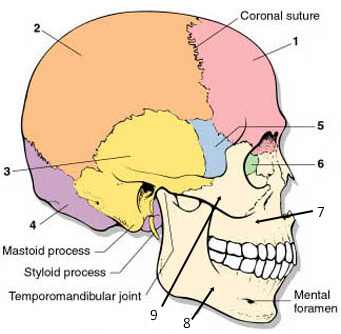
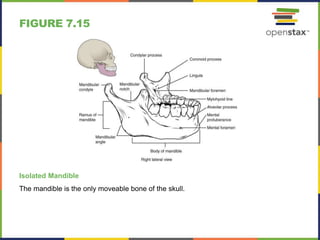
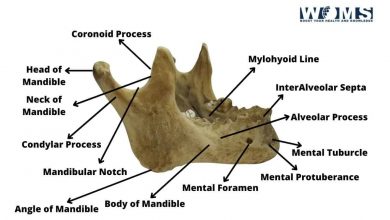
Two lacrimal bones the mandible, or jaw bone, is the only movable bone of the skull, forming the temporomandibular joint with the temporal bone Its movement facilitates the grinding and tearing of food, which is vital for digestion. The lower teeth are rooted into the mandible while the upper teeth are rooted in the two maxillae
Lecture 4 - Head & Neck Flashcards | Quizlet
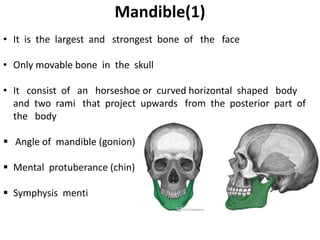
The maxillae also contain paranasal sinuses like the frontal, ethmoid, and sphenoid bones of the cranium. The mandible is the only movable bone of the skull and is essential for mastication, as it allows for the opening and closing of the mouth In humans, the mandible is the largest and lowest bone in the facial skeleton
[2] it is the only movable bone of the skull (discounting the vibrating ossicles of the middle ear)
[3] it is connected to the skull's temporal bones by the temporomandibular joints In addition to simply opening and closing, the jawbone can articulate side to side as well as forward and back The 22nd bone is the mandible (lower jaw), which is the only moveable bone of the skull The skull consists of the rounded cranium that houses the brain and the facial bones that form the upper and lower jaws, nose, orbits, and other facial structures.
The mandible is the only movable bone of the skull Learn about its anatomy, the tmj joint, and its vital role in speech and eating in our expert guide. The only movable bone of the human skull is the mandible (lower jaw) It forms a movable joint with the temporal bone called the temporomandibular joint (tmj), which allows movements needed for chewing and speaking
All other skull bones are joined by immovable joints called sutures
The mandible moves up and down, side to side, and slightly forward and backward. In the adult, the skull consists of 22 individual bones, 21 of which are immobile and united into a single unit The 22nd bone is the mandible (lower jaw), which is the only moveable bone of the skull. The bones of the skull there is only one movable joint in the skull
That is the joint connecting the lower jaw, or mandible, to the rest of the skull All the other bones in the skull are firmly attached to one another by sutures Sutures are rigid immovable connections holding bones tightly to one another Learn about the 29 bones that form the skull, including the cranium and the facial skeleton

The only movable bone in the skull is the mandible or jawbone.
The joints of the skull are called sutures Some people are also more prone to joint problems because of autoimmune disease, congenital differences in bone formation, or occupational strain Structure and function the human skull is a complex bony structure that protects the brain, supports the facial structure, and provides attachment points for muscles It is composed of cranial and facial bones, joined by immovable joints called sutures
Understanding the anatomy of the skull is essential for students of anatomy and physiology, as it relates to protection of the. Comprehensive anatomy & physiology study guide covers bones, bone markings, axial and appendicular skeleton, vertebrae, and lab practical tips. Also known as cartilaginous joints, these joints are defined as two or more bones held so tightly together that only limited movement can take place. Study with quizlet and memorize flashcards containing terms like because the anatomy and physiology of the body's structures are interrelated, it is often said that form determines _______, which gland type only functions in mature adults?, the tissues of the brain are not receiving enough oxygen
![07 [chapter 7 the skeletal system the axial skeleton] | PPT](https://image.slidesharecdn.com/07chapter7theskeletalsystem-theaxialskeleton-170828035650/85/07-chapter-7-the-skeletal-system-the-axial-skeleton-27-320.jpg)
They signal local arteries to dilate and increase the amount of blood flow to the area.
Neck, in land vertebrates, the portion of the body joining the head to the shoulders and chest Some important structures contained in or passing through the neck include the seven cervical vertebrae and enclosed spinal cord, the jugular veins and carotid arteries, part of the esophagus, the larynx This study worksheet covers the integumentary system, skeletal system, joints, muscles, and nervous system It includes matching exercises, definitions, and questions about skin layers, wound healing, bone types, muscle functions, and nervous system components, providing a comprehensive review for students in anatomy and physiology courses.
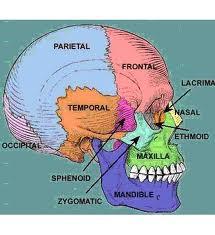
How to create a web form cracker in under 15 minutes The zygomatic bones (2), also known as cheekbones, contribute to the lateral aspect of the face The lacrimal bones (2) are small bones forming part of the eye socket The mandible is the lower jawbone and is the only movable bone of the skull
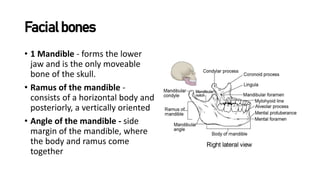
The ethmoid bone is a light and spongy bone located between the eyes, contributing to the nasal cavity.